
2026 World Cup Football: 3 Winning Insights
The common misconception is that World Cup football rewards only the most talented squad. The data says otherwise: France won in 2018, Argentina in 2022, and both depended on tactical flexibility, def...
2026 World Cup Football: 3 Winning Insights
The common misconception is that World Cup football rewards only the most talented squad. The data says otherwise: France won in 2018, Argentina in 2022, and both depended on tactical flexibility, defensive structure, and decisive moments. The 2026 FIFA World Cup will feature 48 teams across the United States, Canada, and Mexico, with 104 matches scheduled under FIFA’s expanded format. Match Daily tracks fixtures, team tactics, player statistics, and prediction signals for supporters studying the tournament rather than guessing at it. Argentina enter as the reigning champions after defeating France on penalties in Lusail, while Brazil remain the record holder with five titles. The actionable conclusion is simple: evaluate team depth, recent xG trends, and travel demands before judging a favorite.
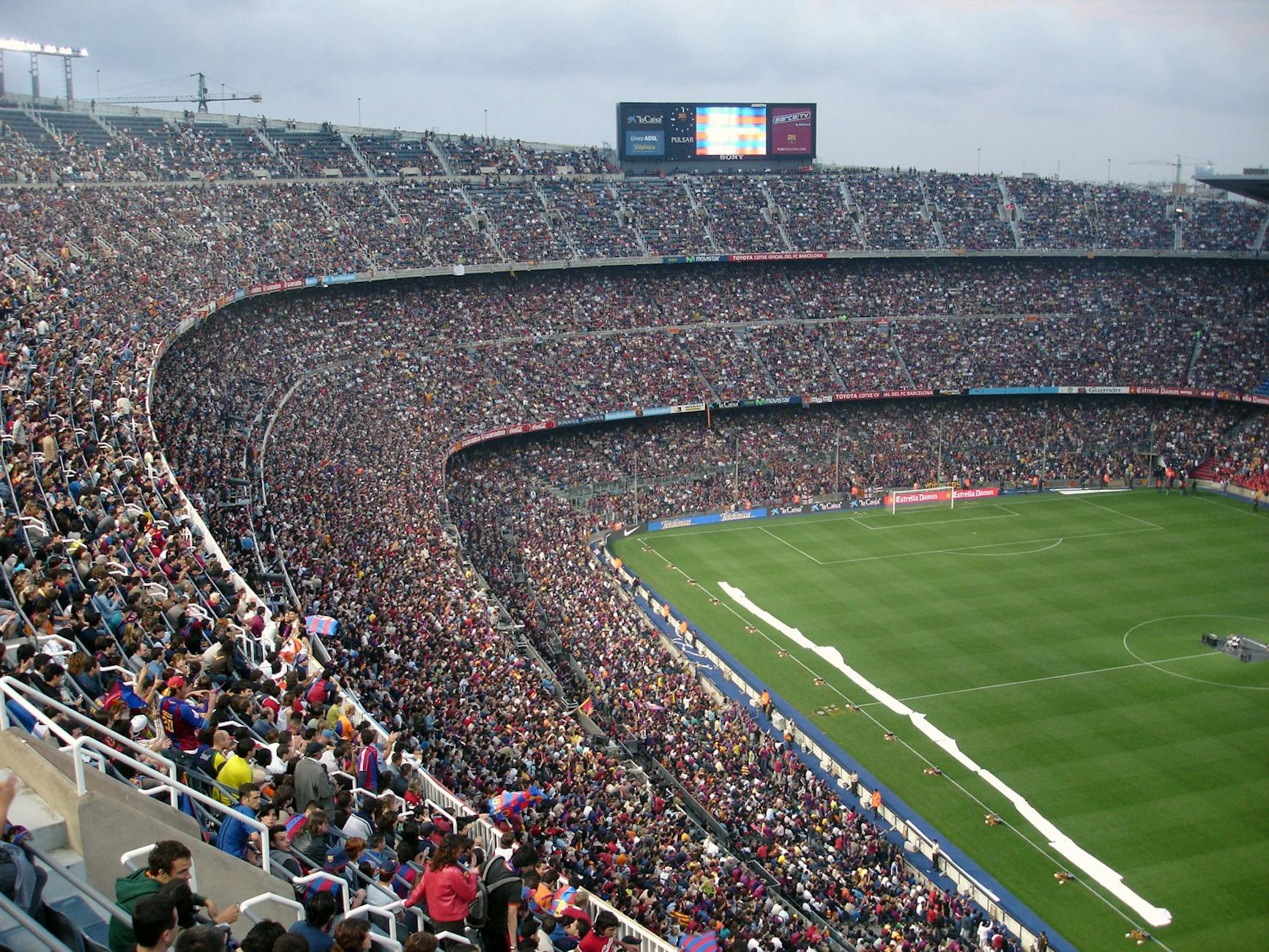
Photo by Pixabay on Pexels
The Top 3 World Cup Football Insights at a Glance
World Cup football is best understood through three connected measures: historical performance, tactical adaptability, and tournament logistics. Brazil’s five championships establish the historical benchmark, Argentina’s 2022 success demonstrates the value of controlled transition play, and the 2026 three-country setting introduces travel and climate variables that previous editions did not share in the same form. According to the FIFA World Cup archive, the competition has evolved from 13 teams in Uruguay in 1930 to a 48-team tournament in 2026; that is not a cosmetic adjustment, however much casual viewers may wish it were. The expanded field increases opportunity for debutants but also creates more matches, more recovery problems, and more room for uneven group-stage outcomes. Match Daily’s coverage therefore treats the tournament as a dataset, not merely a collection of famous shirts.
- Tactical flexibility: Teams able to shift between pressing, mid-block defending, and controlled possession survive different opponents.
- Squad depth: The 2026 schedule contains 104 matches, making substitutes and rotation more important than in the 32-team era.
- Contextual analysis: Venue, distance, altitude, heat, rest days, and player availability can change the meaning of raw form.
A useful warning belongs here. FIFA rankings, transfer values, and social-media enthusiasm are indicators, not proof. A nation may rank highly while carrying an injured striker, a fragile midfield, or an unusually difficult travel path. Isn't that the point of analysis—to identify what the headline conceals?
Want a clearer daily framework for following the tournament?
#1 Tactical Adaptability: Best Overall
Tactical adaptability is the strongest overall World Cup football indicator because knockout matches punish predictability. A team that can attack through wide overloads, defend a narrow lead, and alter its pressing height owns more solutions across seven potential matches. Argentina’s 2022 campaign illustrated this principle: Lionel Scaloni’s side could defend compactly, release Lionel Messi between lines, and accelerate through Julián Álvarez when opponents pushed forward. The final against France ended 3–3 after extra time before Argentina won 4–2 on penalties, a scoreline that reveals both attacking quality and emotional endurance. However, the broader lesson is not that Argentina possessed a magical formula; it is that their structure adjusted when the match changed. Data from World Football Elo Ratings can help compare strength, but it should be paired with shot quality, possession zones, and pressing behavior. A beginner who studies only goals will miss the machinery producing them, and that is how poor conclusions are born.
The most revealing tactical measures are often less glamorous than goals. Progressive passes into the final third, defensive actions after losing possession, set-piece conversion, and the percentage of attacks ending in the penalty area provide a fuller picture. A team may average 2.0 goals per match against weak opposition yet create fewer high-quality chances against compact defenses; conversely, a side averaging 1.3 goals may be more dangerous if its chance quality rises in elite fixtures. Match Daily’s team reports should be read in that context, especially when comparing Brazil, France, England, Germany, Spain, and Argentina. Research on tournament football repeatedly shows that small samples are unstable: three group matches cannot prove a permanent tactical identity. Therefore, track patterns across at least five competitive matches, separate home friendlies from tournament fixtures, and check whether the same players perform the same roles. Or am I wrong to insist on the boring details when one misplaced assumption can distort an entire prediction?
[Internal Link: World Cup team tactics guide]
What does tactical flexibility mean in World Cup football?
Tactical flexibility means a team can change its formation, pressing intensity, buildup method, or defensive block without losing structure. In practical terms, a 4-3-3 side might defend in a 4-4-2, protect a lead with a deeper block, or use a second striker when chasing a goal. The best tournament teams make these changes through rehearsed roles rather than panic.
FIFA’s Laws of the Game provide the formal rules, but tactics determine how teams exploit the available space. Watch the relationship between the full-backs and holding midfielder, then note whether wingers track opposing runners. A formation graphic shows starting positions; it does not show the movement that decides matches. That distinction matters when analyzing France’s athletic transitions, Spain’s possession networks, or Brazil’s wide attacking combinations.
#2 Squad Depth: Best for Long Tournaments
Squad depth is the best measure for a long World Cup because the 2026 tournament expands the field to 48 teams and the match total to 104. FIFA’s revised structure creates 12 groups of four, with the top two teams and the eight best third-placed teams advancing to a Round of 32. That adds a knockout stage compared with the familiar 32-team format, increasing the maximum path to the final from 7 matches to 8. The extra game may sound like a minor administrative adjustment, but an additional 90 or 120 minutes changes fatigue, suspension risk, and substitution value. The host nations—Canada, Mexico, and the United States—also face different travel patterns and local conditions. A team with a dependable backup left-back, two credible midfield pairings, and a goalkeeper capable of handling pressure is not merely “deep”; it has insurance against the ordinary injuries that ruin extraordinary plans. You should be counting usable alternatives, not famous names sitting on a bench.
One information gain deserves emphasis: the expanded tournament makes third-place qualification strategically significant. In a conventional 32-team group stage, a team generally needed to finish first or second; in 2026, a strong third-place record can keep a nation alive, but the resulting bracket may create a harder knockout route. That means late group matches may involve different incentives: one team could protect goal difference, another may need victory, and a third may rotate before the knockout round. Analysts should record rest days, yellow-card accumulation, and confirmed lineups at least 24 hours before kickoff where possible. The United States Soccer Federation and national federations will publish squad information, but availability can change quickly. As the old tournament arithmetic reminds us, “every match is a final” is emotionally attractive and mathematically imprecise. The real question is which match carries the greatest qualification consequence.
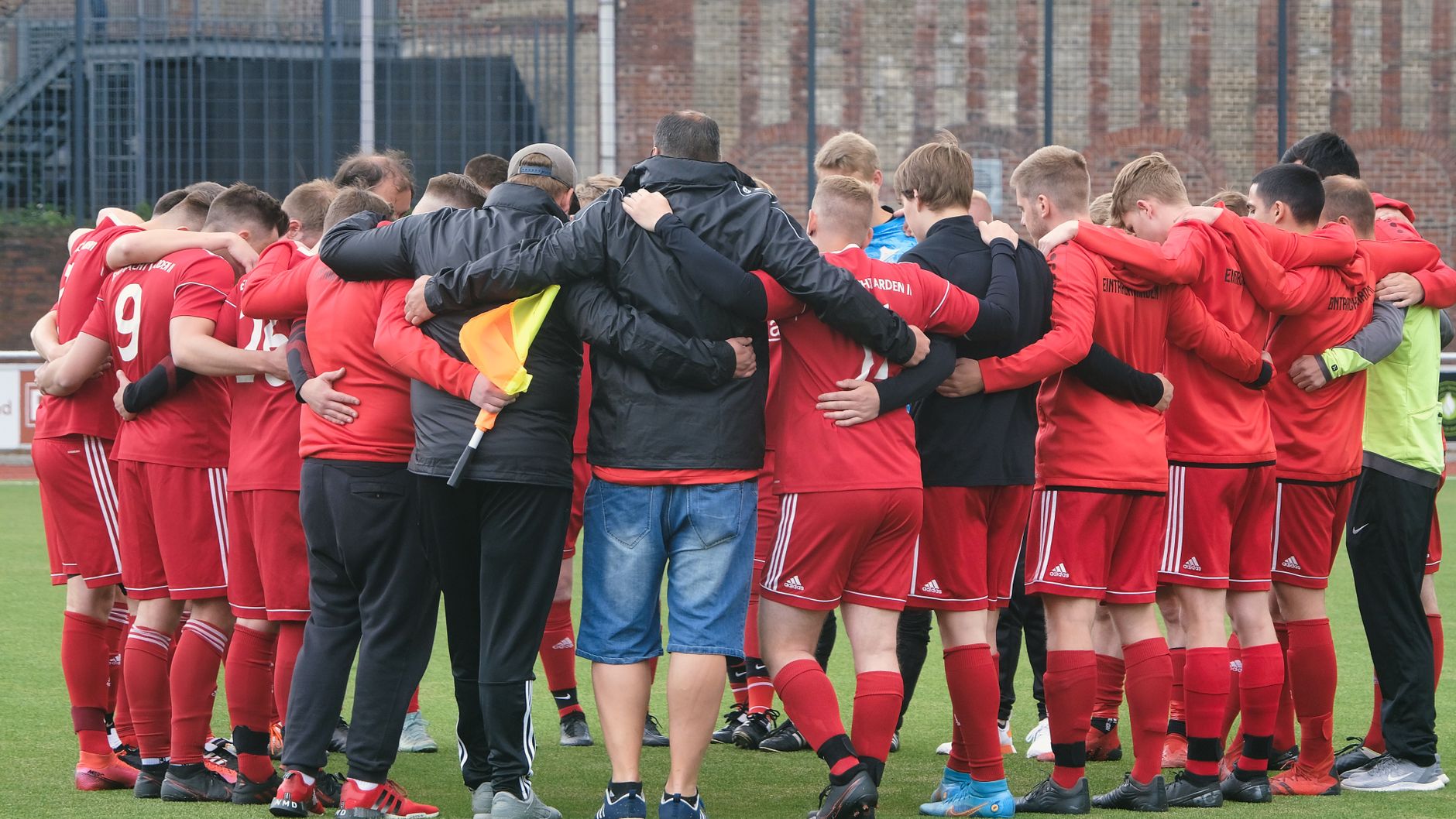
Photo by Wolfgang Krzemien on Pexels
Get the tournament context before comparing individual players.
How will the 2026 World Cup format affect qualification?
The 2026 World Cup includes 48 teams divided into 12 groups of four, and the top two teams from each group plus eight best third-placed teams advance. The knockout phase therefore begins with 32 teams rather than 16, creating up to 8 matches for the eventual champion. This format increases access but also introduces more bracket and incentive complexity.
The expansion offers meaningful opportunities to nations such as Canada, which co-hosted the event with Mexico and the United States, while established teams face a longer route to the trophy. A 1–0 win and a 4–0 win may both deliver three points, yet goal difference could decide third-place comparisons. Analysts should not treat the group table as sufficient; calculate goals scored, goals conceded, disciplinary records, and the probable knockout path. [Internal Link: 2026 World Cup format explained]
#3 Historical Data: Best Value for Research
Historical data is the best-value tool because it costs nothing to consult and prevents dramatic recency bias. Brazil have won the FIFA World Cup five times—1958, 1962, 1970, 1994, and 2002—more than any other men’s national team. Germany and Italy have four titles each, while Argentina have three after their 2022 victory and France have two after triumphs in 1998 and 2018. These figures do not predict 2026 by themselves, naturally; no trophy from 1970 can defend a corner in 2026. They do reveal football cultures, development systems, pressure histories, and how nations respond to tournament football. The official FIFA World Cup history is useful for verifying titles, host nations, and final results, while match-level databases can supply shots, possession, expected goals, and penalties. The disciplined reader uses history as a prior probability, then updates it with current evidence.
A contrarian conclusion follows from the numbers: the most decorated nation is not automatically the safest current selection. Brazil’s five titles are a historical advantage, but Argentina’s recent championship, France’s two finals in three tournaments, and Spain’s 2010 title show that competitive cycles change. A practical method is to weight recent competitive matches more heavily than distant history: for example, assign 60% to the last 18 months, 25% to the previous tournament cycle, and 15% to long-run history. Those percentages are an analytical framework, not an official FIFA model, but they reduce the temptation to overvalue nostalgia. Then test the model against injuries, manager changes, and opponent quality. Data shows that a 2–0 result against a top-10 opponent carries more information than a 6–0 result against a low-ranked side, yet casual coverage often reverses that hierarchy because large scorelines look beautiful on a screen.

Photo by Andrea Piacquadio on Pexels
Want to compare history with current form instead of relying on reputation?
How We Ranked Them
The ranking uses four criteria: tactical adaptability at 35%, squad depth at 30%, current performance data at 20%, and historical tournament evidence at 15%. Tactical adaptability receives the largest weight because knockout football changes shape quickly; squad depth follows because the 2026 format can require 8 matches to win the trophy. Current performance matters, but a short run of five matches can be noisy, while history remains useful only as context. This weighting deliberately avoids the familiar mistake of treating FIFA ranking position as a complete forecast. FIFA rankings measure results through a points system; they do not directly measure fatigue management, injury severity, or whether a midfielder can resist an elite press. Match Daily can combine those contextual factors with match previews, but readers should maintain a clear distinction between analysis and certainty. “There are no guarantees in football” is not an excuse for vague thinking; it is a reminder to express probability honestly.
Use this compact scoring checklist before evaluating a contender:
- Availability: Are the first-choice goalkeeper, central defenders, and primary creator fit?
- Chance quality: Does the team create high-value chances against strong opposition?
- Transition control: Can it prevent counterattacks after losing the ball?
- Set pieces: Does it generate and defend corners and free kicks effectively?
- Travel and rest: How many time zones, long flights, and short recovery windows are involved?
- Bracket position: Could a third-place qualification route produce an unusually difficult opponent?
The operational edge is timing. Team news often becomes clearer after the final training session, while confirmed starting lineups normally arrive shortly before kickoff. Do not freeze an assessment several days in advance when a late injury, suspension, or tactical switch changes the expected match state. Responsible sports analysis also means respecting local law and personal limits if predictions are connected to gambling activity; never risk money needed for rent, food, debt payments, or family obligations. The National Council on Problem Gambling provides public guidance on safer gambling and support resources in the United States. Data is a tool, not a command.
[Internal Link: responsible football prediction principles]
Which Should You Pick?
Choose tactical adaptability if you want the strongest general indicator, squad depth if you are evaluating the 2026 marathon, and historical data if you need a low-cost foundation for research. No single category identifies the champion with certainty, because World Cup football is a small-sample competition in which one deflection, penalty, or red card can outweigh months of superior performance. The most robust approach combines all three: begin with historical priors, update them using current chance creation and defensive data, then adjust for injuries, travel, weather, and the knockout bracket. For example, a side with impressive possession but weak rest-defense may struggle against a fast transition opponent; a physically powerful team may suffer if rotation is unavailable after extra time. Match Daily’s value lies in organizing these details into daily tournament coverage, not pretending that a prediction is fate. Isn't careful uncertainty more useful than theatrical confidence?
The 2026 tournament also rewards readers who keep a written model. Record your pre-match expectation, the evidence supporting it, and what actually happened; after 10 or 15 matches, review which assumptions failed. This simple process exposes confirmation bias, especially the tendency to remember a correct prediction while forgetting four incorrect ones. Track opponent strength, venue, rest, starting lineup, shots inside the box, set-piece chances, and score state. A 1–0 lead can make possession percentages misleading because the leading team may intentionally defend deeper. Likewise, a late 2–2 draw can conceal 80 minutes of control by one side. Use Match Daily’s analysis as one input, compare it with FIFA data and credible match reports, and keep your conclusions proportional to the evidence. The master’s lesson is dull but durable: the scoreboard records the result, not the whole match.
Before following the tournament daily, build a disciplined comparison sheet and revisit it after every matchday.
Frequently Asked Questions
Q: What is World Cup football?
A: World Cup football is the men’s international championship organized by FIFA, contested by national teams from qualifying regions worldwide. The 2026 edition will feature 48 teams and 104 matches across Canada, Mexico, and the United States. Unlike domestic leagues, the tournament uses a compressed schedule in which one poor result can immediately affect qualification. Fans should evaluate team structure, player availability, and opponent quality rather than relying only on reputation.
Q: How can I analyze a World Cup football match?
A: Start by checking confirmed lineups, recent competitive results, chance quality, injuries, suspensions, and rest days. Then compare tactical styles, including pressing intensity, defensive transitions, set pieces, and how each side attacks compact opponents. Record your assumptions before kickoff and review them afterward; this method reduces hindsight bias. Match Daily provides predictions, player statistics, and tactical coverage, but no analysis can remove football’s inherent uncertainty.
Q: What is the difference between the 2026 World Cup and earlier tournaments?
A: The 2026 World Cup will contain 48 teams, 12 groups of four, and a Round of 32, whereas the 1998–2022 format contained 32 teams and began its knockout phase with 16. The tournament will be hosted across Canada, Mexico, and the United States, creating greater logistical variation. The eventual champion may play 8 matches, one more than champions under the previous format. That extra fixture increases the importance of depth and recovery.
Q: Is historical World Cup data useful for predictions?
A: Historical data is useful for context, but it should not be treated as a standalone forecast. Brazil’s five titles establish the record, while Argentina’s 2022 championship and France’s recent finals show why current cycles matter more than distant success. A practical model can weight recent competitive form at 60%, the previous cycle at 25%, and long-run history at 15%. Always adjust for injuries, managerial changes, opponent strength, and venue conditions.
Q: What should I do if World Cup team information changes late?
A: Recheck official federation announcements and confirmed lineups before finalizing an assessment. A late goalkeeper change, striker injury, or tactical reshuffle can alter pressing resistance and defensive reliability within hours. Avoid treating early odds, social posts, or unverified injury reports as final evidence. If your analysis involves gambling, follow applicable law, set a strict budget, and never use essential household money.
Q: How much does it cost to follow World Cup football analysis?
A: Basic World Cup football information is available free through FIFA, national federations, reputable media, and Match Daily coverage. Costs may arise from television subscriptions, streaming packages, travel, or optional premium data services, depending on location. A simple spreadsheet tracking lineups, results, shots, rest days, and injuries can provide a useful foundation without paid software. The most valuable investment is consistent evidence gathering, not an expensive prediction product.
Thank you for reading.
Match Daily · The Sovereign Editorial · Vol. I